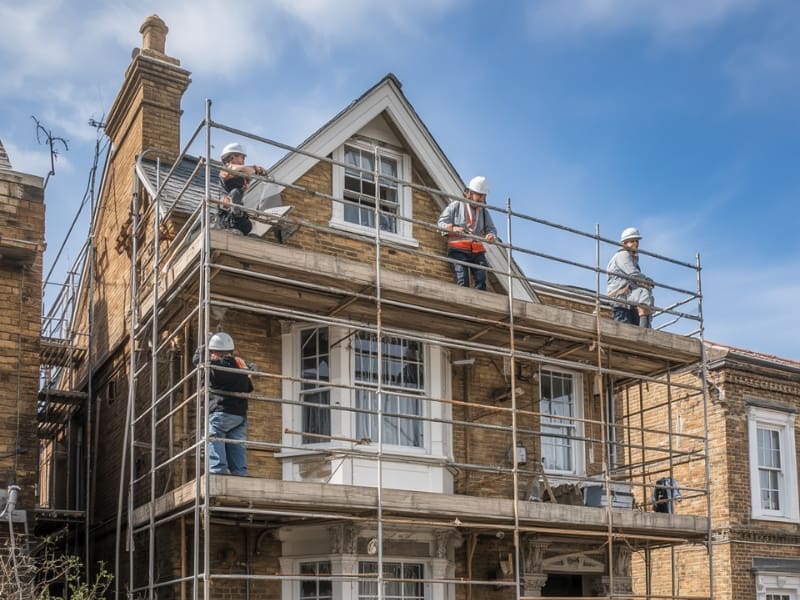

Refurbishing a listed building in the UK can be a rewarding yet complex process. Listed buildings are properties that have been recognised for their historical or architectural significance.
As such, there are specific regulations and guidelines that must be adhered to when making any alterations or refurbishments.
Understanding Listed Buildings
Listed buildings are categorised into three grades:
- Grade I: Buildings of exceptional interest, sometimes considered to be internationally important.
- Grade II*: Particularly important buildings of more than special interest.
- Grade II: Buildings of national importance and special interest.
The level of restrictions and the extent of permissible changes can differ based on the building’s grade.
Obtaining Necessary Permissions
Before you begin any refurbishment work on a listed building, you must obtain Listed Building Consent. This is a legal requirement, and failure to obtain it can result in severe penalties, including fines or even imprisonment.
Steps to Obtain Consent:
- Consult with Local Authorities: Start by discussing your plans with the local planning authority. They can provide guidance and inform you about any specific restrictions.
- Hire Specialists: Consider hiring an architect or a specialist with experience in listed buildings to help with the design and application process.
- Submit an Application: Submit a detailed application that outlines the proposed changes, materials to be used, and how the work will preserve the building’s character.
- Await Decision: The local authority will review your application and may consult with Historic England or other heritage organizations before making a decision.
What Changes Are Permissible?
The aim of these regulations is to preserve the building’s character. Generally, you can expect the following:
- Maintenance and Repairs: Necessary repairs are usually permissible, but they must be carried out using traditional methods and materials.
- Internal Changes: There may be some flexibility with interior alterations, but significant changes to the layout or character could be restricted.
- Extensions: Adding extensions can be challenging, especially for Grade I and II* buildings, as these could affect the building’s historic value.
Potential Challenges
Refurbishing a listed building can be accompanied by several challenges:
- Higher Costs: Using traditional materials and skilled labor can increase costs.
- Time-Consuming Process: Obtaining permissions and carrying out work in compliance with regulations can take longer than standard refurbishments.
- Restrictions: You may be limited in terms of the changes you can make, especially if the building is of higher significance.
Summary
Refurbishing a listed building in the UK requires careful planning and adherence to strict regulations. By working closely with local authorities and experts, you can ensure that your refurbishment respects the building’s historical significance while meeting your needs. Always remember that each listed building is unique, and specific guidance for your property should be sought from relevant authorities.
We can assist you and guide you through the process if you need some assistance. Please contact the team to discuss or get a FREE quotation on our website.